| 1740 |
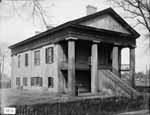 Settlers
begin to arrive in the Wateree River area. One of the earliest
was Thomas Nightengale who established a large horse farm near
Cedar Creek. Settlers
begin to arrive in the Wateree River area. One of the earliest
was Thomas Nightengale who established a large horse farm near
Cedar Creek. |
| 1760 |
Closely following the end of the Cherokee war in 1760 many
Scotch Irish arrived from Pennsylvania, Virginia and North Carolina.
English and French Huguenots came from Charleston area. |
| 1764 |
 Following
the French and Indian war the settlers in the Wateree River
area began to be plagued by small bands of raiding Indians
from the North. The lands around Fairfield and Kershaw Counties
once served as hunting grounds for the Cherokee and were home
to the Catawba and Siouan indian tribes. The Catawba were
great friends of the settlers and traded as well as fought
the Cherokee with the newcomers. These skirmishes gave rise
to a type of frontier lawman called the regulators. They were
led loosely by Moses Kirkland and Thomas Woodward both landowners
in Fairfield County. During the years before the Revolutionary
War Woodward became instrumental in encouraging his neighbors
to take up arms against England. In the end Woodward lost
his life to a bandit. Following
the French and Indian war the settlers in the Wateree River
area began to be plagued by small bands of raiding Indians
from the North. The lands around Fairfield and Kershaw Counties
once served as hunting grounds for the Cherokee and were home
to the Catawba and Siouan indian tribes. The Catawba were
great friends of the settlers and traded as well as fought
the Cherokee with the newcomers. These skirmishes gave rise
to a type of frontier lawman called the regulators. They were
led loosely by Moses Kirkland and Thomas Woodward both landowners
in Fairfield County. During the years before the Revolutionary
War Woodward became instrumental in encouraging his neighbors
to take up arms against England. In the end Woodward lost
his life to a bandit.
|
| 1774 |
John Waggoner was issued land grants near Fairfield County.
Waggoner is best known for building Fort Waggoner as a line
of defense against Indian and bandit raids throughout South
Carolina. A small memorial marker is placed on highway 215
in his honor. Similar forts were constructed elsewhere in
the state as well.
|
| 1775 |
During the Revolutionary war there were relatively few British
loyalists in the area. Often the distance from port cities
and central government instilled a rough sense of independence
in the settlers.
Two of the most well known loyalists were James and John
Phillips. Colonel John Phillips was a personal friend of Lord
Cornwallis who is attributed , by legend, with naming Fairfield
County. Once Colonel Phillips acquitted 70 Whigs ( American
revolutionaries ) who were to be hanged for treason. Sometime
after that Phillips himself was captured in Camden where the
local citizens petitioned successfully for him to be freed
as well. After his release he returned to England.
One of the most notable local personalities was General Richard
Winn of Virginia for whom the town of Winnsboro is named.
Winn was born in 1750 in Virginia
|
| 1780 |
 Moberly's
meeting house near Cedar Creek was the location of a conflict
between a detachment of New York volunteers under Captain
Gray. They attacked a group of local militia. This led to
a later conflict at Dutchman's Creek. Moberly's
meeting house near Cedar Creek was the location of a conflict
between a detachment of New York volunteers under Captain
Gray. They attacked a group of local militia. This led to
a later conflict at Dutchman's Creek.
State Regular Troops at that time were led by Captain John
Buchanon, Captain Thomas Woodward, Richard Winn, and Robert
Ellison. These men were instrumental in leading our state,
and our country to freedom from English rule.
|
| 1785 |
 Winnsboro
was chartered in 1785 by petition of Richard Winn and John Vanderhorst.
In its early days it consisted of a number of businesses and
inns. These included 2 factories, a Masonic hall, market house,
2 entertainment houses, a blacksmith, carriage shop, and about
8 stores. Rumors of witchcraft were rampant at the time and
there was even a witch burning as late as 1792. ( For more information
visit here.) Winnsboro
was chartered in 1785 by petition of Richard Winn and John Vanderhorst.
In its early days it consisted of a number of businesses and
inns. These included 2 factories, a Masonic hall, market house,
2 entertainment houses, a blacksmith, carriage shop, and about
8 stores. Rumors of witchcraft were rampant at the time and
there was even a witch burning as late as 1792. ( For more information
visit here.)
|
| 1812 |
During the war of 1812 Fairfield County resident Captain William
McCreights leads a company of light infantry volunteers. |
| 1860 |
 Lincoln
was elected president and South Carolina secedes from the Union. Lincoln
was elected president and South Carolina secedes from the Union. |
| 1861 |
 Jefferson
Davis was soon elected president of the Confederate States
in 1861. On April 14, 1861 Confederate troops under Pierre
Beauregard open fire on Fort Sumpter in Charleston SC. This
was the beginning of the Civil War. Jefferson
Davis was soon elected president of the Confederate States
in 1861. On April 14, 1861 Confederate troops under Pierre
Beauregard open fire on Fort Sumpter in Charleston SC. This
was the beginning of the Civil War.
The area surrounding the Wateree River is struck hard by
the Civil War. Supply scavengers from northern armies captured
food stores, textiles, money, and jewelry from local homes
and businesses.
|
| 1865 |
 Due
to the location of a telegraph office in Ridgeway General
Pierre Beauregard, the commanding General of the Division
of the west, set up a temporary headquarters on Feb 17, 1865.
He stayed in the Coleman house which has since been renamed
the Century House. The first telegram sent from Ridgeway read:
"Enemy having forced crossing of Saluda and Broad Rivers
above Columbia city had to be evacuated this morning. My forces
are retiring to this place. Everything possible shall be done
to retard enemy's advance, but I cannot separate cavalry and
infantry without fear of disaster, owing to the small number
of latter, only 3,000 effectives. Moreover, having no supply
trains, troops must move along railroads." Signed "G.T.
Beauregard." Due
to the location of a telegraph office in Ridgeway General
Pierre Beauregard, the commanding General of the Division
of the west, set up a temporary headquarters on Feb 17, 1865.
He stayed in the Coleman house which has since been renamed
the Century House. The first telegram sent from Ridgeway read:
"Enemy having forced crossing of Saluda and Broad Rivers
above Columbia city had to be evacuated this morning. My forces
are retiring to this place. Everything possible shall be done
to retard enemy's advance, but I cannot separate cavalry and
infantry without fear of disaster, owing to the small number
of latter, only 3,000 effectives. Moreover, having no supply
trains, troops must move along railroads." Signed "G.T.
Beauregard."
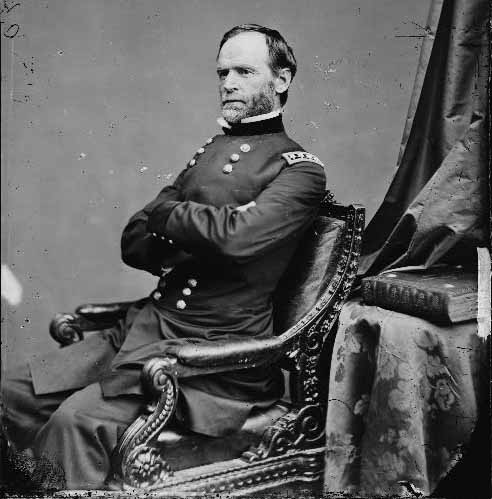
 Sherman
arrived in Winnsboro and continues with his scorched earth
march across the South At that time Winnsboro's male population
was 2, a clergyman and a doctor. 30 buildings were burned
which included homes, stores, and others. Even the Episcopal
Church was destroyed. Sherman was in town for 2 days, but
when he left dispatched a brigade to protect the people from
roving bandits. Sherman
arrived in Winnsboro and continues with his scorched earth
march across the South At that time Winnsboro's male population
was 2, a clergyman and a doctor. 30 buildings were burned
which included homes, stores, and others. Even the Episcopal
Church was destroyed. Sherman was in town for 2 days, but
when he left dispatched a brigade to protect the people from
roving bandits.
|
| 1866 |
 After
the civil war Fairfield County did not share in the prosperity
that followed the war for much of the country. Many farmers
were left without animals to plow the fields, or money to buy
seed. Fairfield lay in a state of depreciation until the coming
of the textile mills in 1898. After
the civil war Fairfield County did not share in the prosperity
that followed the war for much of the country. Many farmers
were left without animals to plow the fields, or money to buy
seed. Fairfield lay in a state of depreciation until the coming
of the textile mills in 1898. |
| 1898 |
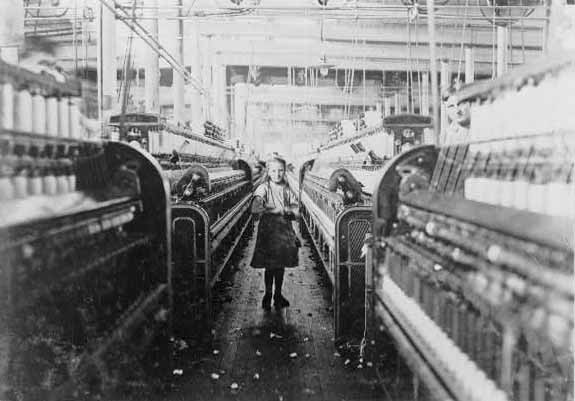
Fairfield Cotton Mills was established by Thomas Lauderdale
and J.M. Beaty. The original plans were for a 5000 spool mill,
but this was later doubled. |
| 1919 |
The Wateree Hydro Station is built near Camden, SC under the
behest of James Buchanon Duke. Duke and his partners were convinced
that hydroelectric power could stimulate the economic growth
of SC and provide for its power needs for years to come. |
| 1928 |
By 1928 they had expanded to two mills which were taken over
by the United States Rubber Company. This marked the turn for
Fairfield County from an agricultural economy to a manufacturing
based one. |












 All
Rights 2003 Lake Wateree Properties.
All
Rights 2003 Lake Wateree Properties.